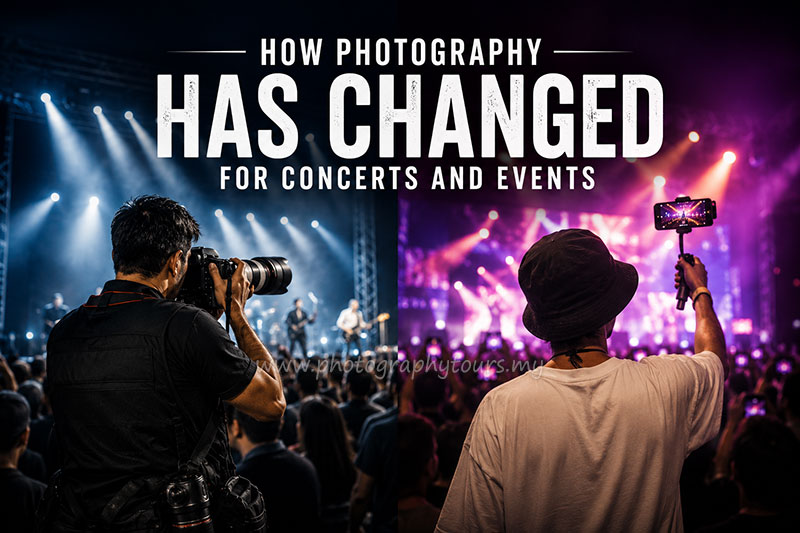
How Photography Has Changed for Concerts and Events
The world is changing too fast, and how photography has changed for concerts and events has changed dramatically over the last decade. What was once a space dominated by professional photographers carrying large DSLR cameras, multiple lenses, media vests, and years of technical experience has now evolved into something very different.
Today, social media influence often carries just as much value as photography skills themselves.
At concerts, festivals, product launches, and lifestyle events, organisers are increasingly inviting influencers, content creators, and younger digital media personalities instead of traditional photographers. The reason is simple – reach and engagement. Many influencers and viral news portals can generate tens of thousands, or even hundreds of thousands, of views within hours of posting content online. For event organisers and brands, this instant exposure has become a powerful marketing tool.
In the past, photographers were mainly there to document moments. Their role was to capture the energy of a performance, the audience’s emotions, and the atmosphere of an event through carefully composed images. These photographs would later appear in newspapers, magazines, websites, or promotional materials. Technical ability, timing, lighting knowledge, and storytelling were highly respected skills.
Digital Age & Shifted Priorities
Modern events are now heavily designed around social media visibility. Instead of waiting days for edited photographs to be published, organisers want immediate online exposure through Instagram Stories, TikTok videos, Facebook Reels, and viral posts. This demand for instant content has opened the doors for a new generation of “media personalities” who may not necessarily come from traditional photography backgrounds.
What makes this even more noticeable is the changing appearance and working style of event media.
Traditional photographers were once recognised by their professional attire, camera harnesses, large telephoto lenses, and organised workflow. Today, many younger influencers and viral portal reporters arrive in laid-back clothing, sneakers, and oversized shirts, often carrying nothing more than a smartphone or a compact mirrorless camera. Yet despite their casual approach, they are still considered media representatives, journalists, or event reporters because of the audiences they bring.
This has completely changed the photography landscape.
For many passionate photographers, it can be frustrating to see years of technical experience overshadowed by follower counts and online popularity. Access to exclusive events is no longer based purely on photography portfolios or publication history. Instead, organisers are increasingly asking questions like:
“How many followers do you have?”
“What is your average reach?”
“How viral are your posts?”
In many cases, visibility now matters more than photographic perfection.
That said, this shift does not necessarily mean traditional photography is disappearing. In fact, professional photographers still play an important role in delivering high-quality visuals, commercial imagery, branding content, and archival documentation that influencers may not always provide. The difference today is that photographers are also expected to adapt.
Many experienced photographers have started embracing social media platforms, short-form video content, behind-the-scenes storytelling, and personal branding to stay relevant in the modern media ecosystem. Some have successfully transformed themselves into hybrid creators, balancing professional photography skills with influencer-style engagement.
Concert and event photography has evolved from simply capturing moments to creating content experiences for online audiences.
But as many people already know, there will always be passionate camera enthusiasts out there. Regardless of trends, algorithms, or viral content culture, there will always be photographers who continue to chase the perfect shot, document unforgettable performances, and preserve memories through their lens.
Technology may change the industry, but passion for photography remains timeless.


Leave a Reply